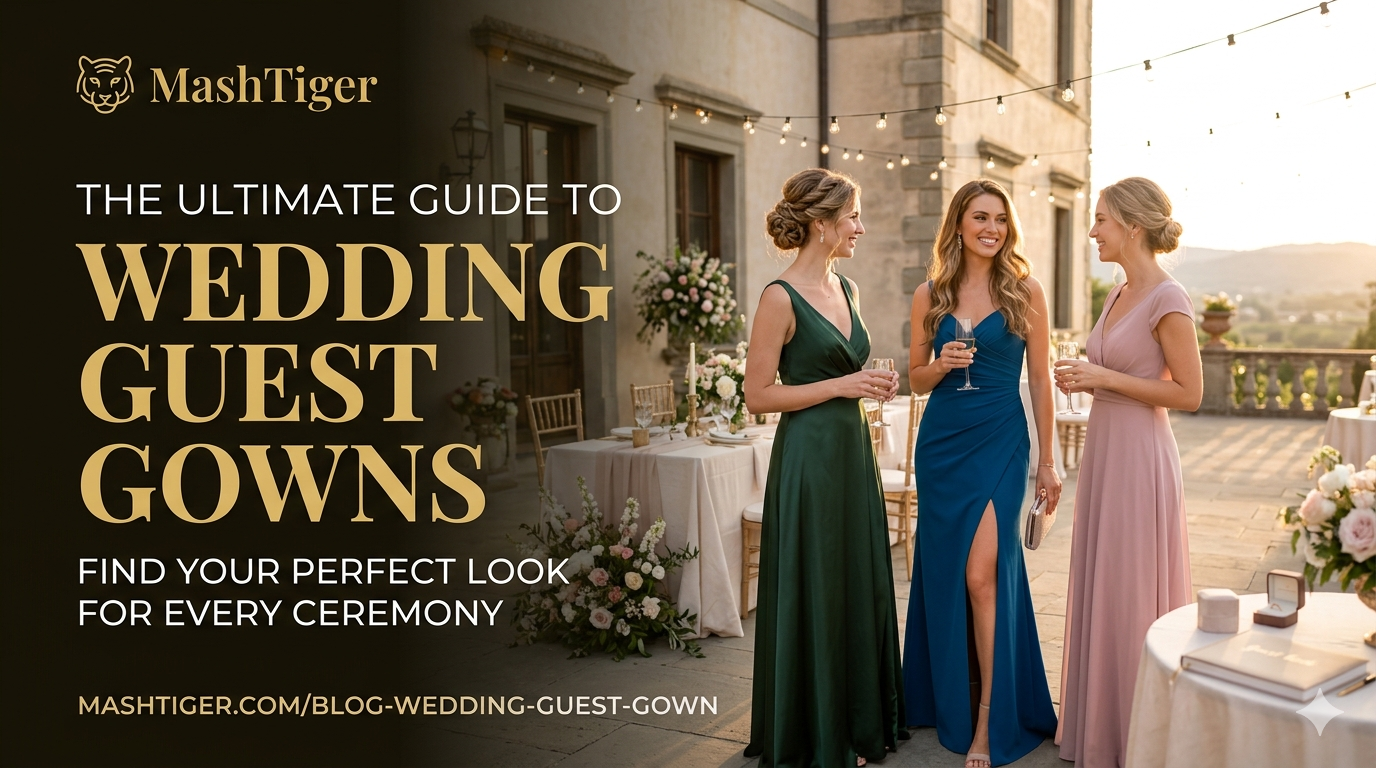
You've been invited to a wedding. The invitation says formal attire — or maybe black tie optional, or garden party chic — and suddenly the most pressing question isn't what gift to bring. It's what to wear. More specifically: how to find a gown that actually fits your body, respects the dress code, and doesn't require three rounds of alterations to look right.
This guide covers what different wedding dress codes actually call for, which silhouettes work best for each, and why fit — not just style — is the piece most guests overlook until the week before the wedding.
Reading the Dress Code (Without Overthinking It)
Wedding invitations use dress code language that can feel vague until you understand the conventions behind it. Here's a straightforward breakdown of the most common levels and what they mean for a guest choosing a formal gown.
Black Tie is the clearest signal. It means floor-length. Full-length gowns are not just appropriate — they're expected. This is the occasion for a sweeping ball gown silhouette or a sleek column dress. Anything shorter reads as underdressed, regardless of how elegant it is on its own.
Black Tie Optional opens the door slightly. Floor-length gowns are still the strongest choice, but a sophisticated tea-length or formal midi can work if it reads as genuinely dressy. When in doubt, err toward longer.
Formal or Cocktail Attire typically means knee-length to midi, though a floor-length gown is never wrong at a cocktail-dress-code event — it simply elevates your look. The key is that the garment reads polished and intentional, not casual.
Garden Party or Semi-Formal is more relaxed in silhouette but still calls for something well-constructed. Flowy A-line shapes and softer, less structured gowns fit the setting. This is not the occasion for heavy ball gown volume, but a graceful floor-length dress in a lighter weight can be perfect.
The guest who overdresses slightly is always more comfortable than the one who underdresses. When the dress code is unclear, choose longer.
Silhouettes That Work — and Why
Dress codes set the formality level, but silhouette determines how you move through the room. Each shape tells a different story and suits different settings, body types, and personal styles.
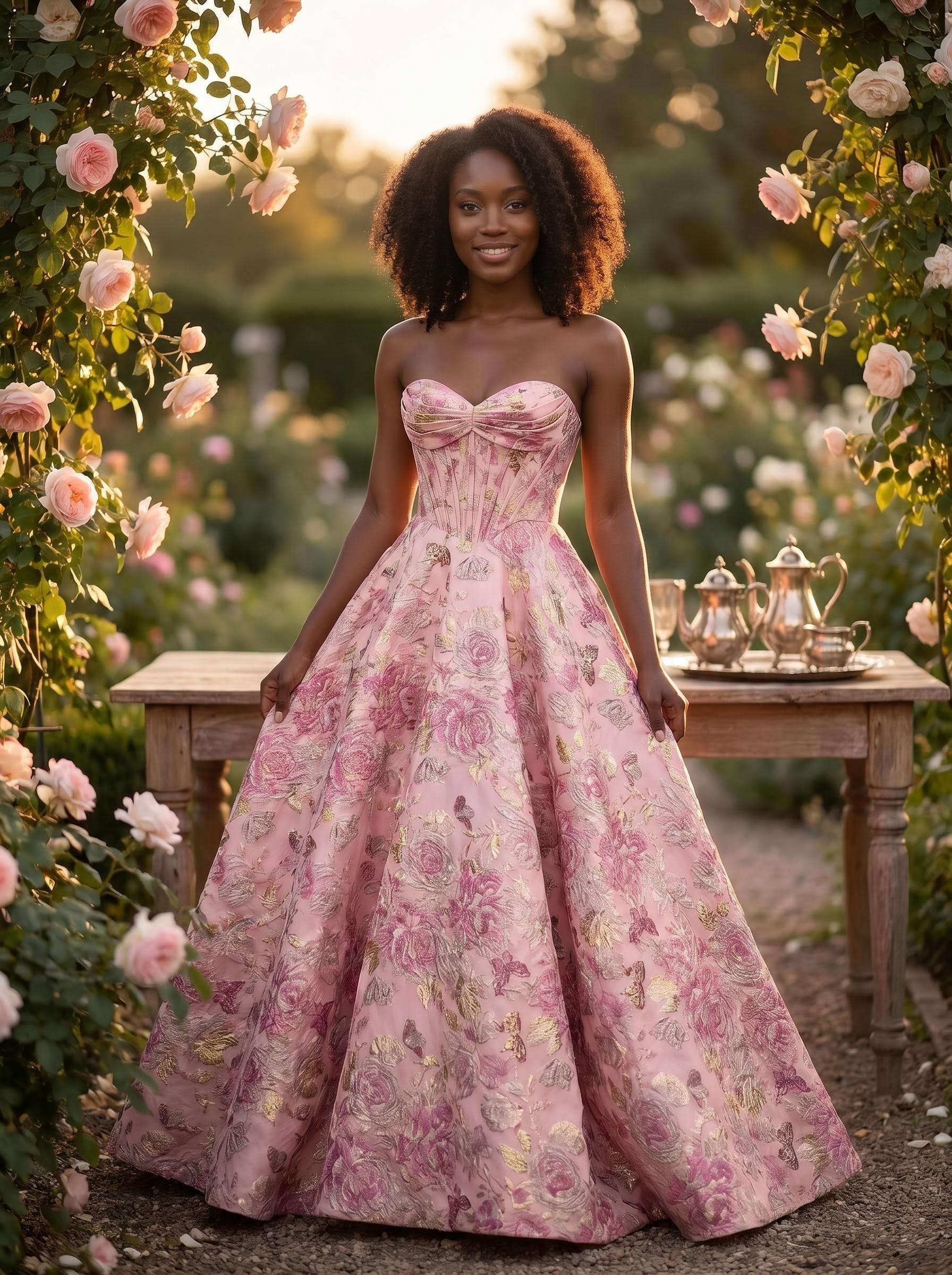
The ball gown is the most formal silhouette available to a guest. A fitted bodice flaring into a full skirt creates a classic, dramatic look that reads unmistakably formal. It commands space in the best way, making it ideal for grand ballroom weddings and black tie affairs. Our Blush Sweetheart Ball Gown captures this silhouette with a sweetheart neckline and a full skirt that moves beautifully — a timeless choice for any guest who wants to feel genuinely dressed up without competing with the bridal party.
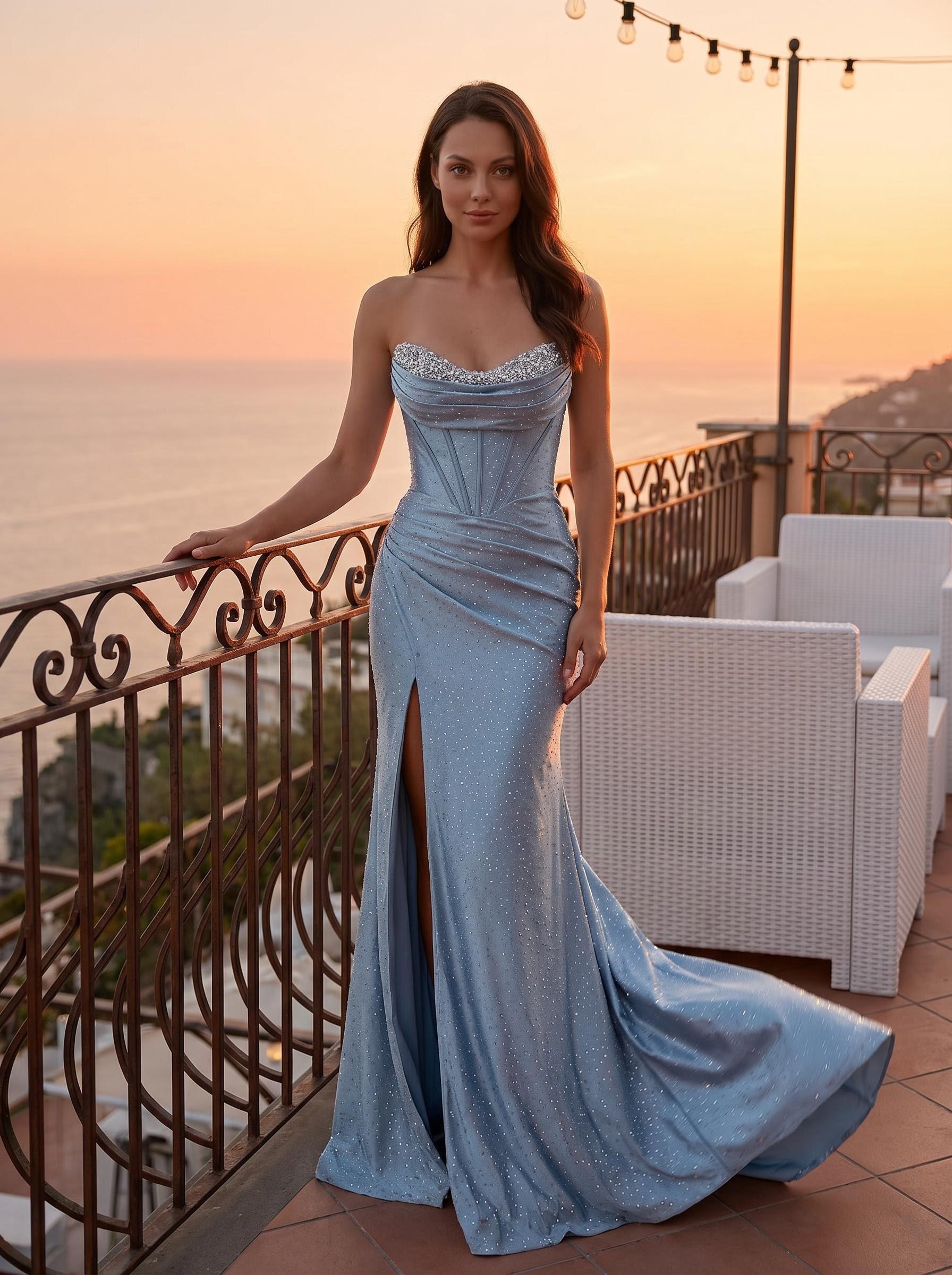
The mermaid silhouette is body-conscious through the bodice and hips, flaring out below the knee. It's inherently glamorous and works well for evening weddings and more sophisticated venues. The Dusty Blue Beaded Mermaid Gown adds delicate beading to a fluid mermaid shape, giving it a quietly elevated quality that suits formal evening events without ever threatening to outshine the couple.
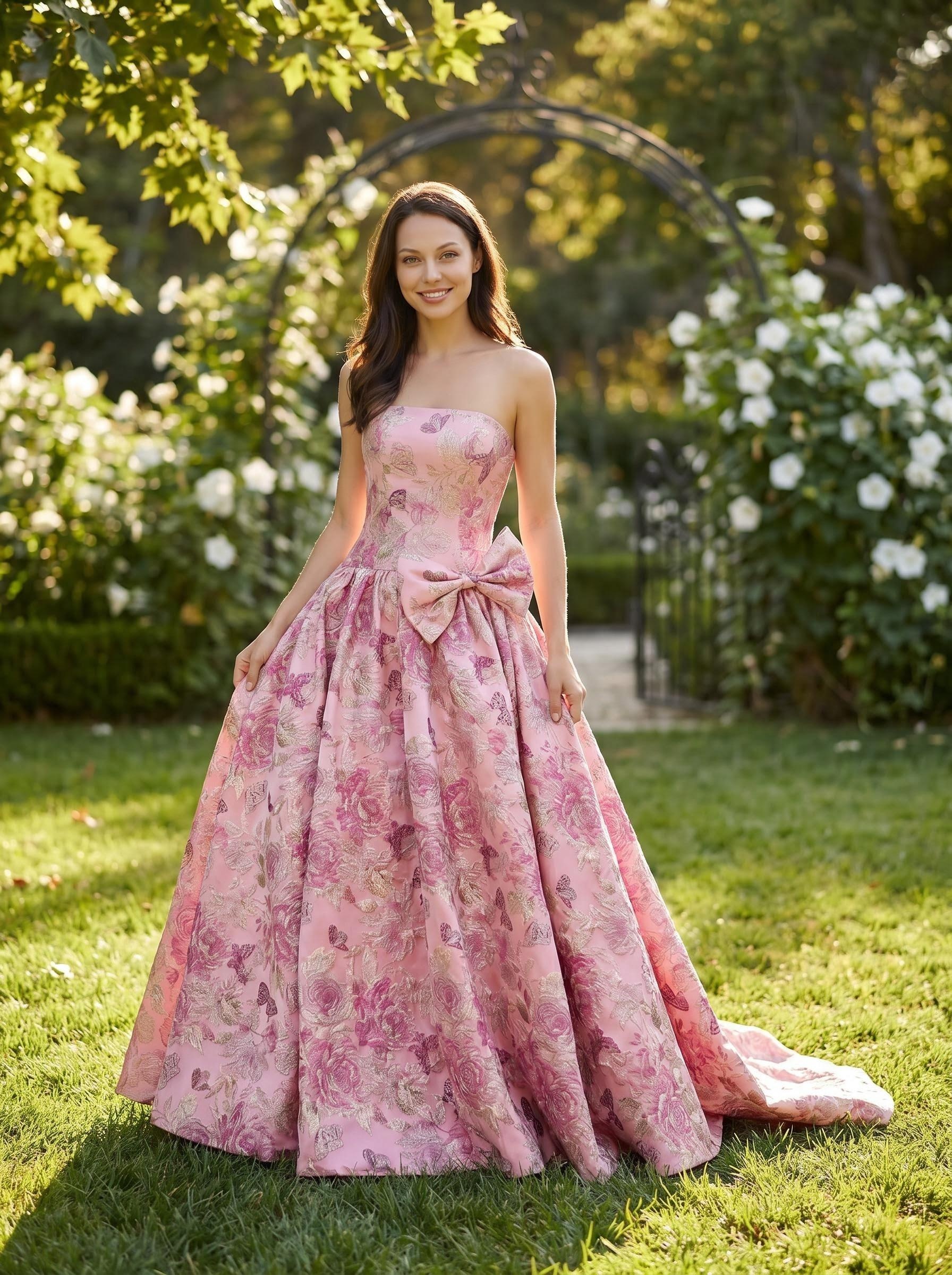
The princess silhouette sits between the structure of a ball gown and the ease of an A-line. It's fitted through the bodice with a skirt that flows rather than dramatically flares, making it universally wearable across venues and seasons. The Blush Princess Gown with Waist Bow adds a single statement detail — a bow at the waist — that brings personality without excess, ideal for daytime ceremonies or outdoor receptions that call for something polished but not heavy.
The Fit Problem Nobody Talks About
Most wedding guests buy a gown off the rack, wear it once, and donate it — often having spent nearly as much on alterations as on the dress itself. This is so common it's become an accepted part of the process. It doesn't have to be.
The core issue with ready-to-wear formal gowns is that they're sized to a hypothetical average body — standardized bust, waist, and hip proportions that may have nothing to do with yours. A size 8 might fit your hips but gape at the back. A size 10 might button perfectly but need two inches taken from the hem. A strapless gown might fit in the store but slip throughout a four-hour reception.
Alterations address these problems after the fact. A skilled tailor can take in a bodice, shorten a hem, or add cups — but each adjustment adds cost, adds time, and introduces risk. Heavily constructed gowns (anything with boning, structured underlinings, or beaded details) are expensive to alter. Rushed timelines mean rushed work.
Made-to-measure solves the fit problem at the source. When a gown is cut to your specific measurements — not to a size chart — it arrives ready to wear. No bodice pinning, no hem tape, no appointment with a tailor two days before the wedding.
How Custom Made-to-Measure Actually Works
The process is more straightforward than most people expect. You take your measurements at home using a soft measuring tape — bust, waist, hips, height, and a few additional points depending on the silhouette. Those numbers are submitted with your order, and the gown is cut and sewn to those dimensions from scratch.
At MashTiger, every gown is made to order in the US and ships within three to four weeks of order placement. Prices start at $190, which puts a custom gown within reach of what most guests already spend on a ready-to-wear dress plus alterations — without the extra appointments or the uncertainty.
When to Order (and Why Earlier Is Always Better)
This is the question guests most often get wrong. The answer: order at least five weeks before the wedding date, six if you want a comfortable buffer.
With a three-to-four week production window, ordering five weeks out means your gown arrives at least a week before the event. That gives you time to try it on, assess the fit, and handle any minor adjustments if needed — without any last-minute scrambling. It also gives shipping a cushion in case of unexpected delays.
The guests who order two weeks before the wedding are the ones who end up paying for rush shipping, wearing something they found at the last minute, or — most commonly — showing up in a gown that technically fits but doesn't feel right. The difference between a beautiful dress and a great dress is almost always time.
If your event is in late spring or early summer — historically the busiest season for weddings — build in an extra week. Order eight weeks out if you can. The gown will wait for you.
A Few Guest Dress Etiquette Notes
Beyond silhouette and fit, there are a few longstanding conventions worth keeping in mind. Avoid white, ivory, and cream in any shade that could read as bridal — this is one of the few hard rules in guest attire that still holds universally. Blush is generally fine, especially in clearly non-bridal silhouettes like the structured Blush Sweetheart Ball Gown or the softer Blush Princess Gown with Waist Bow.
Match the venue's formality level, not just the dress code label. An outdoor vineyard wedding with a cocktail dress code is different from a hotel ballroom with the same label. Think about the floor you'll be walking on, the lighting, the season, and the overall atmosphere the couple is creating.
Dress for comfort as well as appearance. A gown that fits perfectly — that doesn't need to be adjusted at the table, that doesn't shift during dancing, that you don't think about once you're wearing it — is the ultimate goal. That's the promise of made-to-measure: a gown you can wear fully, rather than manage.
Find Your Wedding Guest Gown
Every gown is made to your measurements. Ships within 3–4 weeks. US only. Starting at $190.
Browse the Collection